Melissa Chan School for Studies in Art and Culture at Carleton University in Ottawa
Current Students – PhD Programme
 Trycia Bazinet
I am a PhD Candidate in Indigenous and Canadian Studies from Carleton University, Ottawa. I am from around La Sarre, Abitibi-Temiscamingue, Québec and I currently live in Luxembourg.
My research is on hydro and geo social relations falls into the field of environmental humanities and melancholia human geography. Information technology takes place on the territory of the Abitibi8inni, which is located around the Abitibi lake and now divided past the provincial edge between Quebec and Ontario. For my projection I ask unlike people how they relate to the Abitibi lake today, and particularly to its possible imminent disappearance. In terms of environmental history, I discuss how geological factors (post-glacial rebound) collaborate with more recent and anthropogenic and eutrophication-inducing factors (damming, boating, rejection of used waters, agriculture) to impact the lake, whose fate and own role in the process becomes ambiguous and open up to interpretation.
This work is meant to assist in providing a local motion-picture show of gimmicky hydro social relations in the context of settler-colonialism and to comment back on the material weather condition affecting the implicated realities, on racism, on ontological (in)commensurabilities and on the anthropocene.
 John Carlson
I am Anishinaabe (Red Stone Indian Ring) and a proud father of one (and so far).
My work deals with the relation between Indigenous self-determination and class struggle. I have been trying to understand the general impasse that I believe characterizes the relationship between settler lodge and Indigenous nations, and this has led me to study the nature of capitalism in relation to Indigenous struggles. This in turn has suggested to me the need to think through the relation betwixt the structural theft of state and the separation of the majority of Canadians from the means of production as the crux of this impasse. Based on this starting indicate, I argue that the labour marketplace is an essential condition of settler colonial domination. More significantly, it is the atomization and fragmentation of the working-class (a racialized, gendered, sub-humanized working-course) that is indispensable for the reproduction of settler colonialism. From this, it follows, I contend, that intra-class struggle betwixt Ethnic peoples and other segments of the working-class is crucial for developing the inter-national struggle betwixt colonizer and colonized. Every bit a case study, I look at the origin of the Water Protector in the refusal to work, which I sympathise every bit the same fundamental dynamic as the struggle of labour in relation to capital.
If you're interested in discussing these things, please email me asap: johncarlson@cmail.carleton.ca
 Amy Chamberlin
In the wake of Indian residential and day schools, in an age of apologies and calls to activeness, settler Canada, it seems, is committed to achieving reconciliation with Indigenous Peoples. My dissertation research investigates dominant representations of the Indian Residential School Organization, which oftentimes testify reconciliation every bit a 'national hug' intended to restore relations after acknowledgment of past harms. Is it possible to anticipate deeper forms of reconciliation, which acknowledges harm and affirms Indigenous knowledge systems? If then, how? In this intervention and animation research project, I am assembling and working with recollections and memories of a item Indian day school from both oral and archival records.
I grew up in Cumberland, Ontario. I now call Listuguj Kickoff Nation 'home' where I alive with my partner, Fred, and our three children – Emma, Je'gopsn, and Erika. Since 2005, I have worked with several First Nations organizations in the areas of health and education.

William Felepchuk
I am a historical geographer primarily researching the dead and the places they inhabit in the historical geographies of race and colonialism in southern Ontario. My thesis is about the desecration past settler whites of the burial places of Anishinaabek and historic Black communities in what are now known as Greyness and Bruce counties, and the subsequent reclamation of these sites by communities. I was built-in in North York, on the lands of the Mississauga nation, and moved with my family at the age of 4 to Ottawa, on the unceded territories of the Algonquin nation, where I take lived since. My ancestors came to Canada between 1840 and 1910 from Ukraine, Italy, England, and the Ulster region of Republic of ireland.
I have recently published an commodity entitled "Racial Necrogeographies in a Settler Colony: the life and death of 19th Century burying places in rural Ontario" in a special issue on Blackness and Indigeneity in the American Indian Civilisation and Research Journal (2019), as well as book chapters in volumes chosen Institutions and Well-Being: Heritage, Infinite, & Bodies (Academy of Gothenberg / University College London) and Minorities in Canada – Intercultural Investigations (Károli Gáspár University of the Reformed Church building in Hungary). I have a forthcoming co-authored article in the International Journal of Islamic Compages on the racist backfire to the establishment of Muslim cemeteries in the Westward (2022). I accept also researched the history of Italian colonialism and have a forthcoming co-authored affiliate on Italian aggression in Somalia in the volume The Invisible State of war: WWI in the Italian Colonies, part of the War and Militarism in African History book series (Ohio University Press, 2022).
I have presented my research at the International Gild of Educational Biography in San Antonio, Texas (2019), Native American and Ethnic Studies Conference in Los Angeles, California (2018) and Honolulu, Hawaii (2016), and the British Association of Canadian Studies Briefing in London, Britain (2018), among others. I take taught a variety of courses in Indigenous and Canadian studies at Carleton and am a director at the Indigenous-endemic company Archipel Research and Consulting (www.archipelresearch.com). I am a member of the Justice for Abdirahman Coalition, a grouping that "has been working to obtain greater transparency in policing, challenge racial inequity, and bring positive change in local and provincial institutions in honour of the belatedly Abdirahman Abdi and his family" (www.justiceabdirahman.ca).
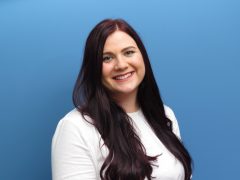
Gale Franklin
Gale Franklin is a PhD student in the Schoolhouse of Indigenous and Canadian Studies and she is also concurrently pursuing a Graduate Diploma in Migration and Diaspora Studies. Gale completed her Primary's in Ethnomusicology at Memorial University of Newfoundland, and her Available of Music Honours at Carleton University. Gale is a settler vocalizer-songwriter and music teacher who grew upwardly on Treaty one Territory.
Gale's One thousand.A. research explored the pre and post-migration sonic experiences of Syrian refugees as well as examined how music acts equally a site for experiencing the globe and understanding oneself and one's surroundings. She investigated how music and listening experiences are interconnected with retention, trauma, senses of belonging, and intersensoriality. Edifice on this research, Gale explores how music and other forms of expressive culture shape newcomer experiences in Canada and how they can be used to facilitate settlement and integration experiences also as intercultural agreement in Canada. In the context of Canada's commitment to the resettlement of refugees, her project advances our agreement of the challenges and possibilities faced by newcomers to Canada. Through collaborative efforts, Gale'due south research engages newcomers in program development designed to raise their integration experience and daily lives in Canada.
 Amy Fung
Amy Fung is a writer, curator and organizer of multifarious events.
Born in Kowloon, Hong Kong, she has lived and worked on the Treaty six territory of Edmonton, the unceded territory of the Musqueam, Squamish and Tsleil-Waututh First Nations of Vancouver, the Treaty territory of the Mississaugas of the New Credit in Toronto, which is bailiwick to the Wampum Belt Treaty of the Dish With Ane Spoon, an agreement between the Haudenosaunee Confederacy and the Anishinaabe to peaceably share and care for the resources around the Great Lakes, and currently on unceded Algonquin, Anishinabek territory.
She received her Masters in English and Movie Studies from the Academy of Alberta in 2009 with a specialization in criticism, poetics, and the moving image. Taking a decade long pause from academia, she has been working professionally as an independent writer and curator for newspapers, magazines, journals, festivals, galleries, and museums since 2007.
Her kickoff book on Canadian art and identity,Earlier I was a critic, I was a human existence, was published by Artspeak and Book*hug Press in 2019.
 Andrew Gemmell
PhD candidate with the School for Indigenous and Canadian Studies, with a specialization at the Establish of Political Economy, theorizing the Canadian Crown. Undergrad at Wilfrid Laurier, double honours Religion and Civilization, and Philosophy (undergraduate project: 'Rastafari as Political Ideology: Afrocentric, Anticolonial, and Eschatological Historical Consciousness'). MA Philosophy at the New School for Social Research (thesis championship: 'Archaic Vulnerability: Ontological Dynamics of Wonder in Ancient Greece and Compassion in Revolutionary France'). Recent publication: 'Defending Indigenous Rights from the Just Society' in 1968 in Canada: A Yr and its Legacies (University of Ottawa Press, April 2021: https://press.uottawa.ca/1968-in-canada.html).
I alive with my family unit on unceded Omàmiwinini territory.

Allyson Green
Allyson Dark-green is a Ph.D. candidate in the School of Indigenous and Canadian Studies at Carleton University.
Her fundamental research project examines how disability has been explained conceptually, politically and linguistically in Canada. As a neurodiverse academic, she seeks to deconstruct the arbitrary division between 'ability' and 'disability,' 'normal' and 'aberrant' and is particularly interested in how creative and artistic social interventions can disrupt able-bodied and able-minded normativity.
By research projects have explored globe-making through queer inability art and the promotion of settler responsibility through critical date with Ethnic artworks.
 Kimberley Keller
Kimberley Keller is a 2nd twelvemonth PhD student at Carleton Academy in the Schoolhouse of Canadian and Indigenous Studies. She completed both her BScH in Environmental Science and her MA in Global Development Studies at Queen's Academy.
Kimberley's research centres on environmental rights and the application of legal personhood to various ecosystems. Secifically, Kimberley is analyzing the impacts of nature rights on the preservation of local environments, the proliferation of Maori culture, and the accountability of corporations and governments as exemplified by the Whanganui River in New Zealand. Subsequently, Kimberley will utilise the data to the Canadian context and critique the office environmental legal personhood could play in environmental conservation, Indigenous-Crown relations, and the resource extraction sector.
 Miranda Leibel
Miranda is a settler scholar and doctoral candidate in the School of Indigenous and Canadian Studies and the Institute of Political Economy. Miranda was born and raised in ᐊᒥᐢᑿᒌᐚᐢᑲᐦᐃᑲᐣ (Amiskwacîwâskahikan/Edmonton) in Treaty 6/Métis Territory. She holds a BA(hon) and MA in Political Science, as well equally a Certificate in International Learning, from the Academy of Alberta.
Miranda's research, supervised past Dr. Jennifer Henderson, interrogates provincial kid death inquiries as governmental technologies of transparency, request whether or not the spectacle of intimate violence and trauma, followed by the public scrutiny of the state, reinforce, complicate, legitimize, or otherwise shift the reality of provincial jurisdiction over kid welfare (for example, by reaffirming the land as the managing director of children and families in general). Miranda's research is framed by a critical political economic system lens,and gives specific attention to the intersections of settler-colonialism and neoliberalism in gimmicky Canadian policy.
 Jamie McCullough
My name is Jamie McCullough and I am from a small community tucked away in the Laurentians in Quebec. I moved to Ottawa years agone and at present call information technology domicile. I am a daughter, married woman, mother of 4 and an aunt to many nieces and nephews.
I hold a Masters degree from the School of Indigenous and Canadian Studies at Carleton. My PhD research interests prevarication in cross cultural education, race and racism, treaty negotiations, educational activity, and experiential learning. I am interested in researching how Indigenous studies has been taught over the last 50 years in Canada compared to contemporary teaching methods influenced past the calls to activeness from the Truth and Reconciliation Commission.
 Victoria Pelky
Victoria Pelky is a Ph.D. pupil in the School of Indigenous and Canadian Studies and is concurrently pursuing a Graduate Diploma in Curatorial Studies. Victoria completed her Master's in Indigenous and Canadian Studies at Carleton Academy and her BaH in History and French at Trent University.
Victoria'southward M.A research explores the position of French-speaking minorities in Canada at the provincial level following Quebec's motion towards provincial nationalism and the implementation of the Official Languages Act into Canadian constabulary. She investigates how the Constitutional division of power has impacted linguistic communication laws and led to direct provincial restrictions on bilingualism and on separate French-linguistic communication education in the provinces.
Focusing on provincial legislation that was produced every bit a response to language agitation following the Royal Commission on Bilingualism and Biculturalism and its effects on minority French-language communities, she shows that despite various efforts by the federal authorities to implement language laws in order to protect Francophone minorities and encourage the idea of bilingualism as a national narrative, the continual, historical, and calculated deportment of assimilation at the provincial level reflects the dominant Anglo-Saxon narrative rooted deep within the nation, highlighting the lack of unity between political governance and the competing definitions of the national Canadian identity.
 Melissa Pole
Melissa is a filmmaker and visual artist. She combines her research with both visual and digital art mediums. Her current focus is on arts-based, disquisitional and decolonial pedagogy, community based collaborative methods and methodology, and decolonial futures. She implements these interests on multiple fronts.
Adjustment her work with Ethnic land-based and ecology politics, Melissa teaches textured printmaking as part of fine art therapy sessions for survivors of sexual violence with Muskoka Parry Sound Sexual Assault Services. Within these sessions, the outdoor surroundings is combined with various painting mediums to create environmentally based techniques for both creative practice and healing.
Every bit part of multiple unlike arts communities in her hometown Bracebridge, Ontario, on unceded Anishinaabe, Kanienʼkehá꞉ka, and Mississauga territories, she advocates for the implementation of the TRC recommendations for alter. 1 of her projects includes a 2021 development proposal for collaborative Ethnic/settler arts infrastructure and outdoor/indoor arts installations with the Boondocks of Bracebridge. Her proposal was recently passed through town quango and reviewed by the downtown development working group.
Melissa aims to bring critical decolonial and arts-based pedagogical perspectives into her didactics and research practice through the integration of expressive arts therapy. More accessible and grounded within community, the expressive arts allow for new epistemological frames to emerge as teachings become embodied. Aware of how cognition product processes intimately shape the kinds of knowledge produced, the expressive arts permit for grounded approaches to pregnant making that pause through colonial constructions of space/time besides as institutional and structural limitations on knowledge creation processes.

Samantha Stevens
Samantha Stevens specializes in international communications and relations, and humanitarian structural development and crunch aid. She holds a BA in English at Athabasca Academy, with a particular focus on British, Canadian, and post-colonial literature, ethics, and the psychological furnishings of mass media. She recently completed a Graduate Diploma in journalism and was awarded an MA in journalism upon the completion of her thesis: "Towards Reconciliation: The White Savior Trope in Canadian Newspaper coverage of Grassy Narrows First Nation between 1977 and 2019."
Samantha's research deals primarily with revealing a vestige of the antiquated colonial system, the white savior trope, in news media, policy, and Canadian guild. She is particularly interested in how colonialism has embedded itself within the English language, and how such a perspective is then recreated through social and political reinforcement.
Her select publications include "Exporting the White Savior: The Colonial Textual Influence on Canadian/Indigenous relationships" and "Journalism Education and Call to Action 86: Exploring Conciliatory and Collaborative Methods of Enquiry-Creation with Ethnic Communities," which she coauthored.
Her current enquiry explores the differing conceptualizations of jurisprudence between Indigenous legal orders and Aboriginal police (settler law applied to Indigenous peoples), and how those concepts intersect, relate, and conflict over fourth dimension. Centered specifically on Anishinaabe law, governance, and constitution, this enquiry is focused on the ongoing Restoule v. Canada (Attorney Full general) case in which representatives of the 21 Indigenous signees of the Robinson-Huron Treaty are suing the Ontario and Federal governments for failing to uphold their treaty obligations.
 Michelle Thompson
My disciplinary background is in Information Science, the study of the creation, storage, sorting, and dissemination of data in its many forms. The written report of information isn't just about databases and archival documents. Information technology'south a meta-assay of every text and image y'all tin can see, hear, read, and interact with.
As a Canadianist, my expertise is in Canada'due south linguistic minorities, Francophone identities, and the cultural production of migrant musicians and singers. My doctoral research focuses on the representation of BIPOC Francophone artists in the Festival manufacture, the promotional role of Facebook, and how both produce cultural representations of Frenchness here in Canada. I explore their contribution to Canada's Francophone culture, linguistic communication, and identity. —
Mes intérêts de recherche portent sur la représentation des artistes francophones PANDC dans l'industrie des festivals, et sur le role promotionel de Facebook. J'examine leurs contributions à la culture, la langue et l'identité des Francophones du Canada.
Source: https://carleton.ca/sics/canadian-studies-program/ph-d/current-students/
0 Response to "Melissa Chan School for Studies in Art and Culture at Carleton University in Ottawa"
Post a Comment